|
Junyi Students Step Into the World
|
|
[Cover Story] This year, 15 students from Junyi High School of Innovation were selected for Taiwan’s Ministry of Taiwan Global Pathfinders Initiative. Each brought a project and questions of their own, and they spent two to four weeks learning in Japan, South Korea, the United States, Canada, Australia, the United Kingdom, or Germany.
Some stepped into forensic labs in the U.K. and walked away with new thoughts about their futures. Others explored Indigenous history in Canada which led them to reflect on their
own culture and homeland. Their journeys also covered community revitalization, sustainability, food and agriculture, wildlife conservation, K-pop, and street dance. Learning happened not only in classrooms and site visits, but also through each encounter with an unfamiliar culture.
Gaining a global perspective can also bring young people closer to home. The students returned with new ways of seeing their own communities. They came back with a deeper understanding of culture, land, identity, and society—and a clearer sense of who they hope to become. Read more. |
|
|
Seeking New Ideas for Hualien and Taitung
|
|
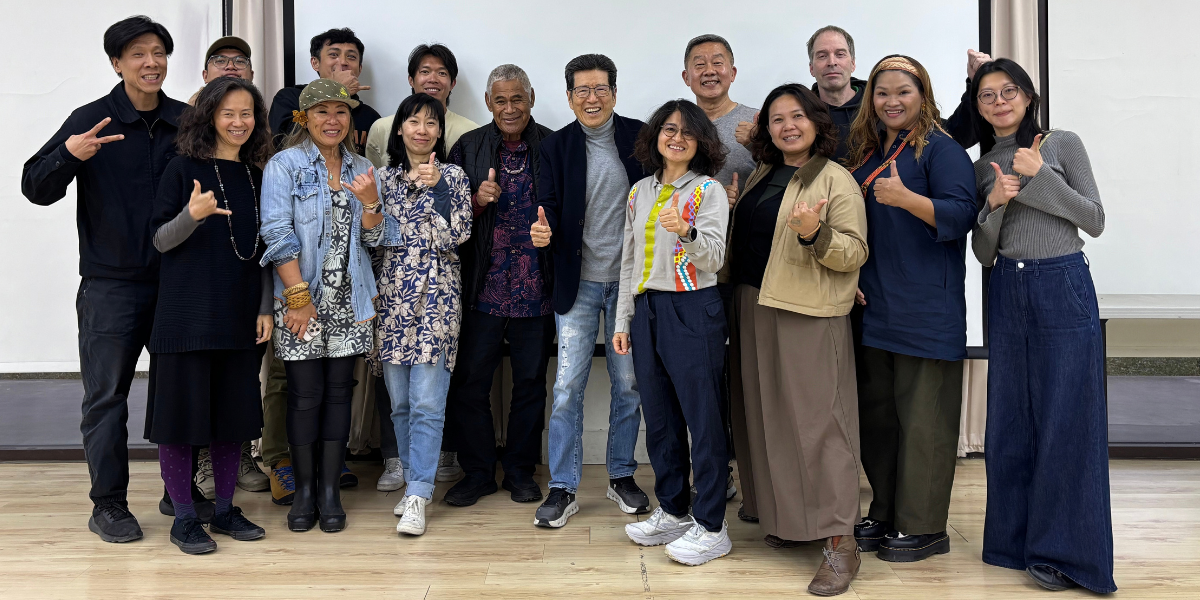
[The Alliance Cultural Foundation] The fifth Hualien-Taitung Sustainability - Hawaii Study Tour set off on October 10, bringing together 16 participants from diverse backgrounds in Hualien and Taitung. Since March, the group has participated in a series of training sessions and collaborative learning activities, gaining a deeper understanding of Hawaii’s cultural heritage and sustainability
practices.
At their final pre-departure training session, participants reviewed the 12-day itinerary and travel guidelines, practiced traditional dances and chants in preparation for cultural exchanges, and took part in a hands-on Western dining etiquette workshop led by Patrick Su, leader of the fourth cohort’s group leader. Covering everything from attire and seating arrangements to the use of utensils and table conversation, the workshop encouraged participants to approach different cultural settings with attentiveness and respect.
Traveling far allows us to discover new possibilities. This year’s program continues its focus on Indigenous culture, education, and cultural tourism, with
a stronger emphasis on ocean culture and traditional navigation. Participants will explore local businesses, environmental conservation, and community-based industries, examining the connections among culture, the land, ecology, and local development. They will then bring these experiences and insights back to Hualien and Taitung, turning what they have learned into local initiatives and exploring new possibilities for sustainable development. |
|
|
New Exhibition: Beyond the Canvas
|
|
[Paul Chiang Arts and Cultural Foundation] Are limits an ending—or the beginning of endless possibilities? Earlier this year, 84-year-old Paul Chiang was rushed to a hospital after suffering a brain hemorrhage. His illness abruptly disrupted his routines and limited his physical mobility, prompting a profound question: Where could his artistic journey lead next?
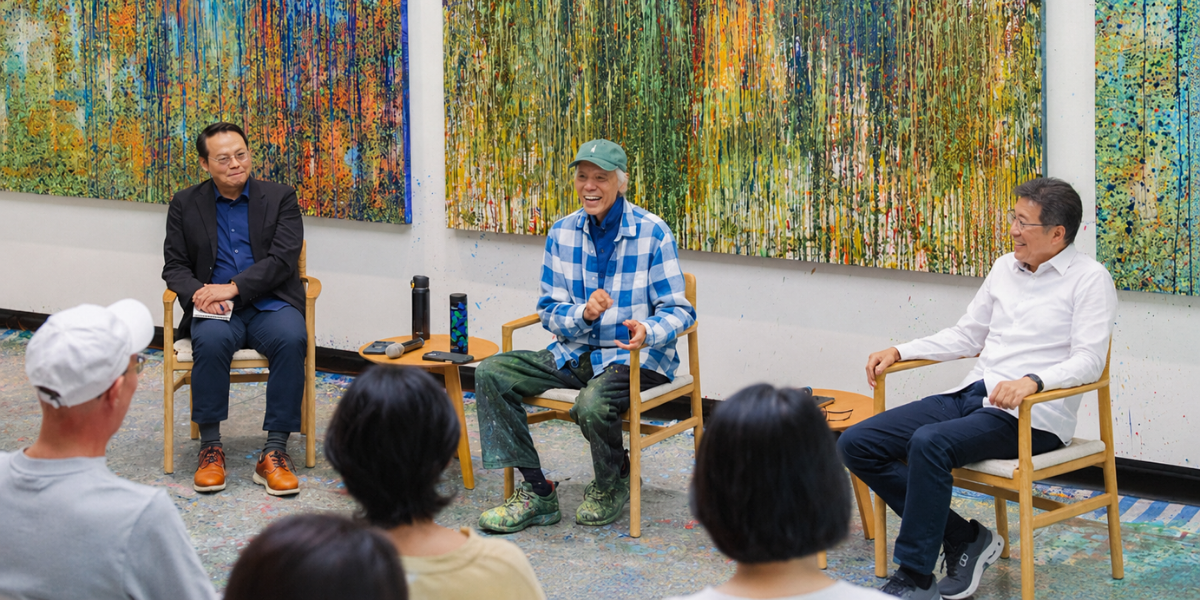
The new exhibition, Beyond the Canvas: Matter and Spirit in the Art of Paul Chiang, opened on September 18. Highlights include Window, Chiang’s first video work in his 60-year artistic career; the site-specific Beyond the Canvas 26; and the Morning Reading / The New York Times series, created using pages from the newspaper he has read for decades. These works represent new creative explorations undertaken during his recovery.
During the opening weekend, the Art Center hosted three days of free activities, including a Salon Concert, an exhibition talk, and an interactive Art Center tour. Visitors were invited to explore the grounds in the golden light and sea breezes of
early autumn, gaining insight into Chiang’s artistic vision in recent years. Despite life’s challenges and his struggles with illness, love has continued to guide him forward.
Perhaps what visitors take away from the Art Center is not only the art itself, but also the hope and love that Chiang has believed in throughout his life. Plan your visit. |
|
|
Hearing the Ocean Through Language and Movement
|
|
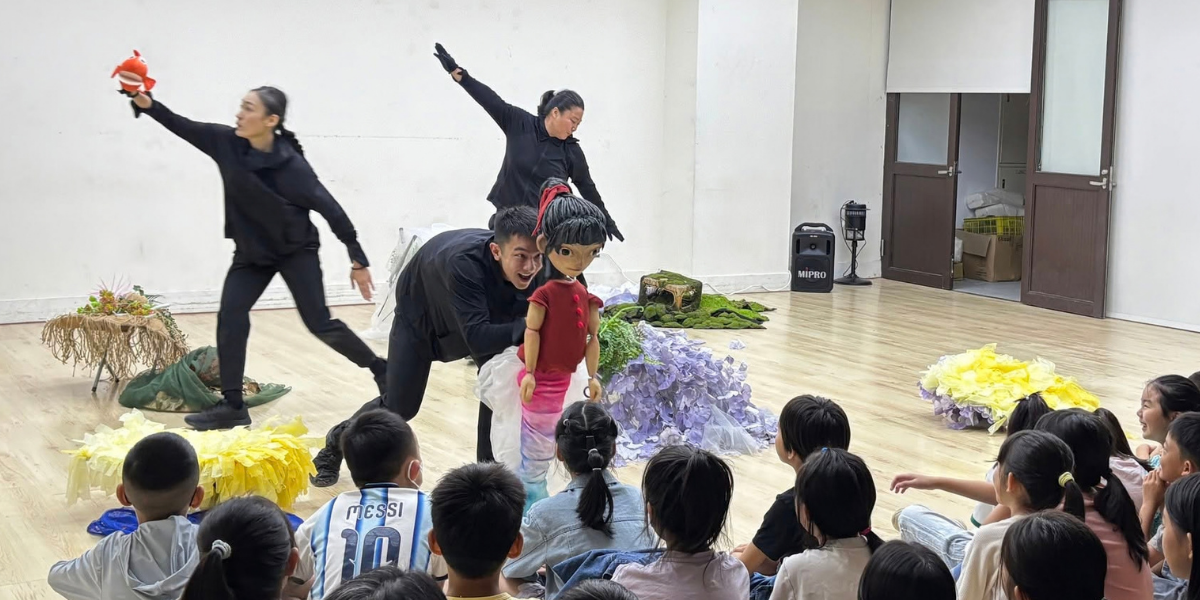
[Junyi School of Innovation] In 2024, Body Knows Dance brought its production of Xiaorui’s Little Universe of the Body to Junyi, introducing children to the sounds and rhythms of Taiwanese through theater. This year, the troupe returned with a new production performed entirely in Taiwanese: Body Map—A Cultural Journey Through Nature: Beginning with the Ocean.
“The coral
has turned white. We have nowhere to live.” Onstage, a clownfish laments the loss of its home to Xiaorui. “We have to keep searching for new places to live. It’s exhausting. If I move to the city someday, will that new place still feel like home?” As Xiaorui prepares to move with her mother, she witnesses the plight coral reefs, fish and other marine life, prompting her to reflect on what it truly means to call a place “home”.
Taiwanese is already part of the local-language curriculum at Junyi Elementary School, giving students regular opportunities to engage with the language. Through puppetry, physical movement, illustrated cards, and storytelling, the performance drew children naturally into the
story, bringing them closer to both the Taiwanese language and the ocean. See more photos.
|
|
|
Junyi String Ensemble Takes Shape
|
|
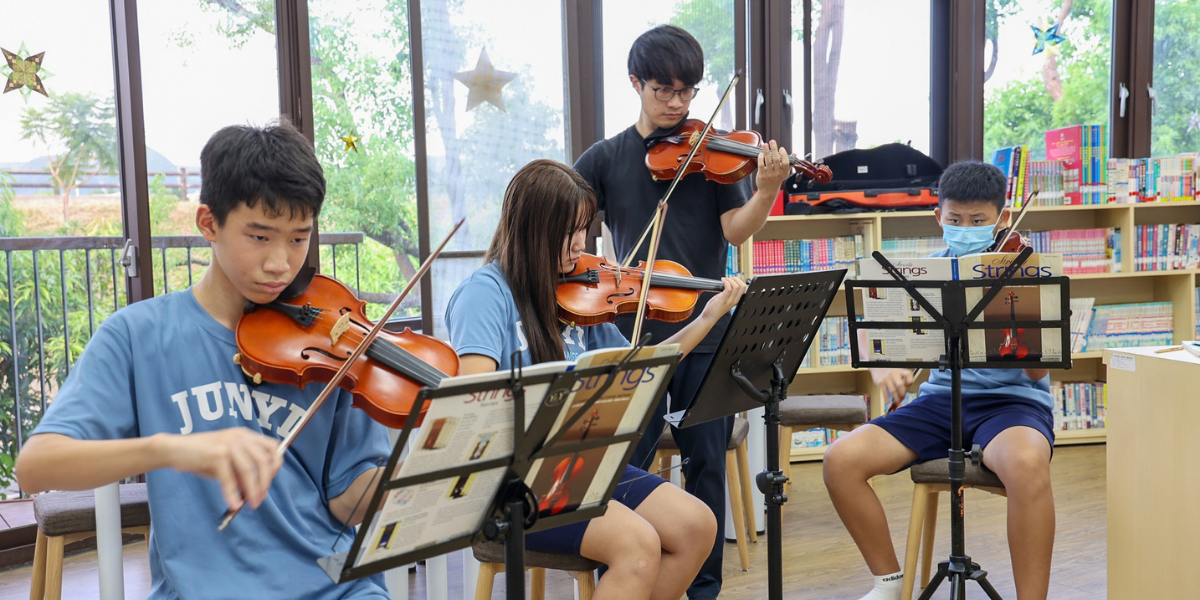
[Junyi School of Innovation] The clear, bright sounds of string instruments have been heard across the Junyi campus since the school officially launched its string ensemble this semester. With support from the Taitung Echo Orchestra, professional instructors now teach on campus one to three times a week, offering sectional instruction and five full-ensemble ensemble rehearsals each semester. The goal is to gradually establish a comprehensive and sustainable music education program.
“The most important part
of playing together is learning to listen to one another and work as a team,” said Liao Yi-fen, director of the Taitung Echo Orchestra. Beyond mastering individual techniques, students develop focus, patience, and collaboration as they learn to follow one another’s timing and rhythm, bringing their individual sounds together to create a harmonious musical performance.
The ensemble currently includes 10 students in Grades 7 through 10. Through consistent instruction and opportunities to perform on stage, Junyi hopes to inspire more students to appreciate the beauty of classical music and grow through their shared musical experiences. See more photos. |
|
|
|
|