Setting Out — Taiwan Global Pathfinders Initiative

Taiwan’s Ministry of Education launched the Taiwan Global Pathfinders Initiative to help young people broaden their global perspectives while exploring their identities and cultural roots. In 2026, 15 Junyi School of Innovation high school students were selected for the program.
Over two to four weeks, each student traveled to one of seven countries—Japan, the United States, South Korea, Australia, Canada, the United Kingdom, and Germany—to pursue projects ranging from public design, forensic science, and regional revitalization to sustainability, food innovation, K-pop, street dance, and wildlife conservation.
After they returned, we spoke with two students about how their experiences abroad reshaped their understanding of the world-and of themselves
Canada: Exploring Indigenous Culture
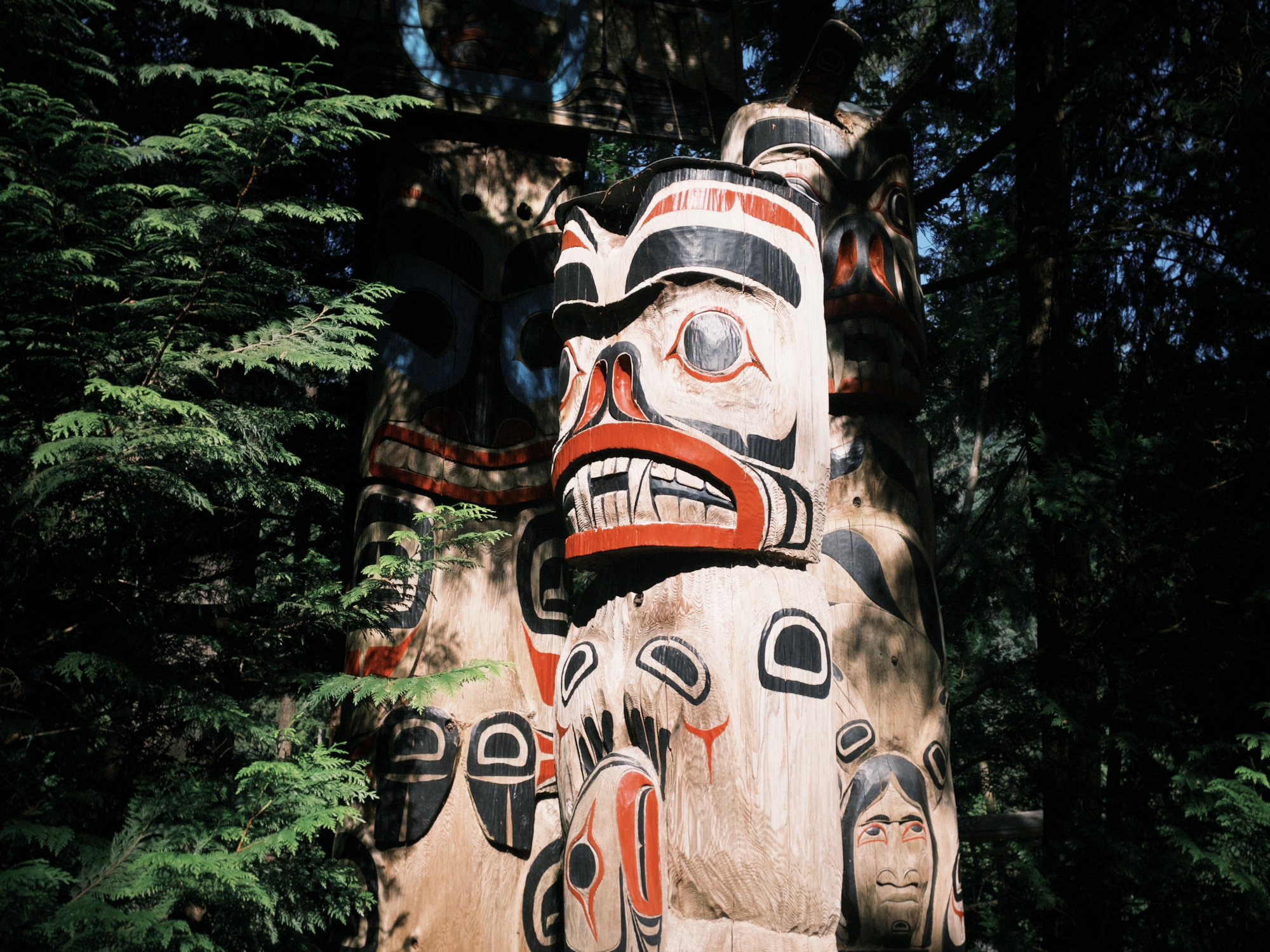
Tjinuway, a Paiwan student from Mudan Township in Pingtung, traveled to Canada with two fellow Indigenous students, one Bunun and one Amis. Together, they explored how Indigenous communities in Canada preserve their cultures, address land issues, and navigate their relationship with the wider society.
At the start of our interview, she introduced herself with quiet confidence:
“I’m Indigenous. My name is Tjinuway, and I’m happy when people call me by my name.”
She explained that many Indigenous young people hesitate to introduce themselves by their traditional names, worried that others may struggle to pronounce them or ask too many questions. She herself first found the courage to use her Paiwan name with strangers at a university summer program.
She was named after a wise, independent female relative who had passed away more than a decade earlier. Her grandparents gave her the name in hope that she would grow up like her respected relative. For Tjinuway, her name became a thread connecting her to her roots.
A Blank Space on the World Map
Tjinuway’s uncle has long been involved in Indigenous rights advocacy and often told her about land issues affecting their community. In the past, however, she felt these complicated topics were far removed from her own life.
That changed in Canada.
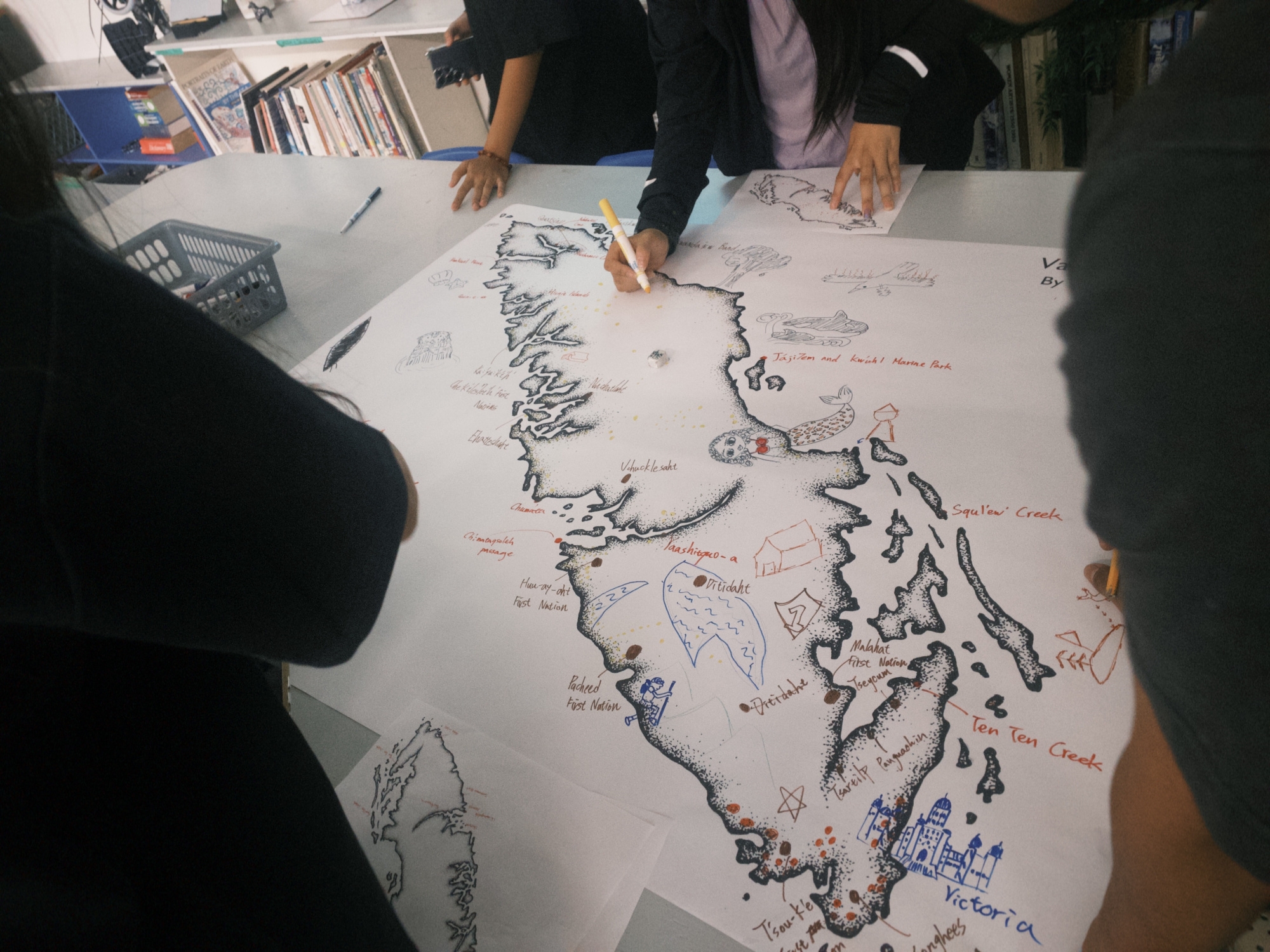
During the program, an instructor showed the students a world map identifying Indigenous communities around the globe. “I was excited to find Taiwan—but there was nothing marked there.” The blank space made her wonder how Taiwan’s Indigenous peoples could become more visible internationally—and what role she might play.
A visit to a museum about Canada’s Indigenous residential school system introduced her to a painful chapter of the country’s history of Indigenous children being separated from their families, prohibited from speaking their languages, subjected to forced labor, and pressured to assimilate.
The experience prompted Tjinuway to share the story of her own hometown, including the Mudan Incident and the construction of a reservoir from the late 1980s into the 1990s. The project was intended to meet regional water needs but affected traditional Paiwan lands used for living, farming, hunting, and ancestral burials.
“The elders didn’t really have a choice. The government decided to build it, and the community had to accept it. Eventually, the way the entire community lived and worked changed.”
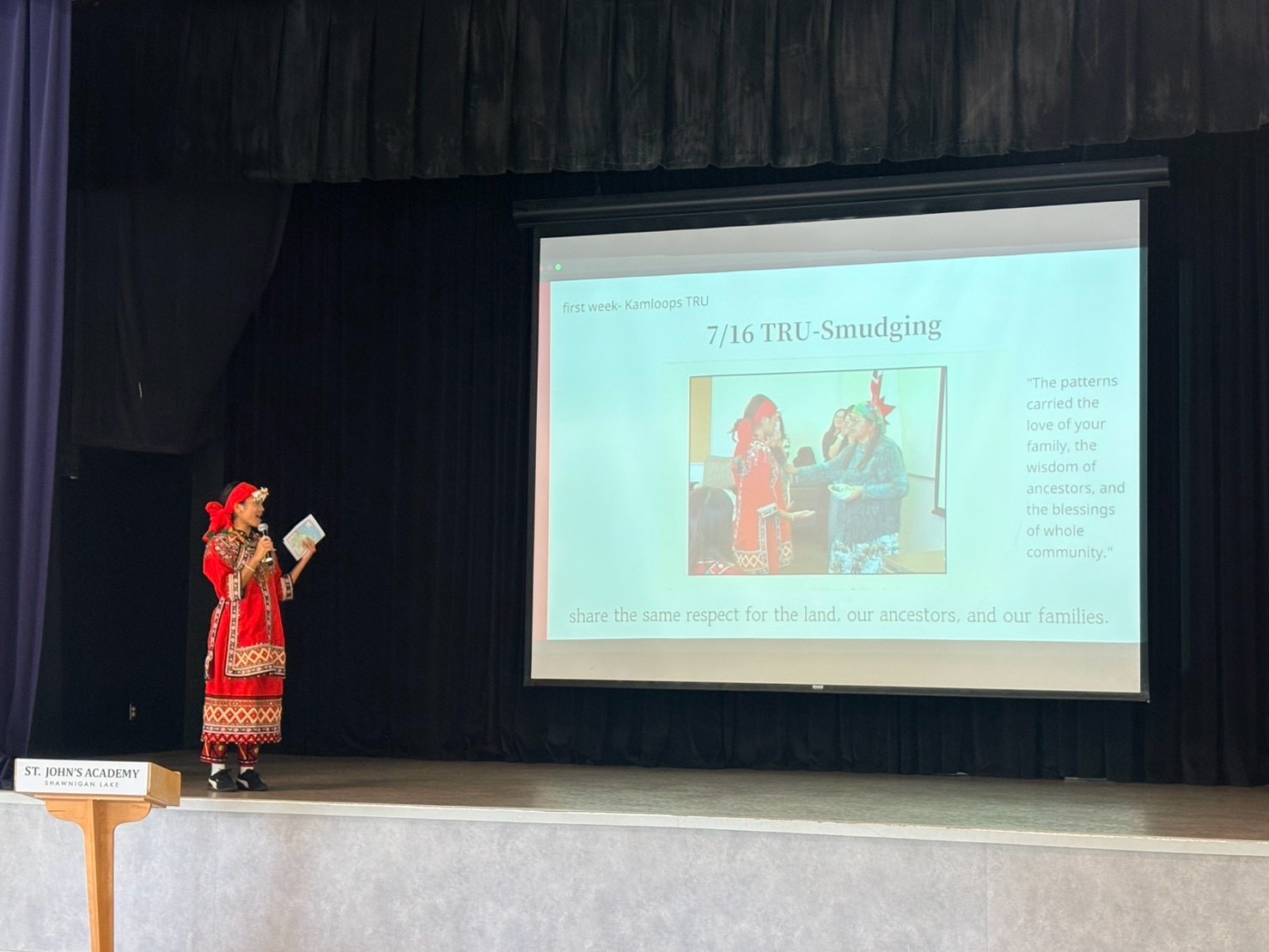
Recognizing parallels in histories of land injustice, she gave a presentation in English about her hometown and her people. Afterward, a Canadian teacher thanked her warmly for sharing her story.
Becoming a Storyteller
After returning to Taiwan, Tjinuway learned that a piece of traditional family land was about to be transferred to her sister. Curious, she began asking questions and discovered that her ancestors had lived there before the community was relocated from the mountains—and that family burial sites remained beneath the old home.
“It was the first time I had ever heard the story. Before, I probably wouldn’t have asked. Now I’m much more interested in understanding the history behind things.”
At Junyi, Tjinuway participates in the school’s experimental Creative Studies curriculum, specializing in green architecture. Through observation, reflection, and expression, students explore ecology, aesthetics, technology, and sustainable living. The experience has also encouraged her to think about how these ideas might take root in her own community. She now hopes to become more involved in her community’s youth association. “It’s a very direct way to serve the community. If I have an idea, I don’t have to do it alone. I can work with others who care about the same things and turn that idea into something real.”
Her journey to Canada ultimately led her to deeper questions: Who does the land belong to? What does a name represent? Through learning about others, she began to see Taiwan—and her own culture and heritage—through a fresh set of eyes.
United Kingdom: A New Perspective on Forensic Science
Another Junyi student, Hsieh, traveled to the U. K. through a forensic science program.
Her interest in the field began with her mother, who noticed her attention to detail and suggested she explore forensic science. The summer before 11th grade, she attended a forensic science camp at Taiwan’s Central Police University, where she became fascinated by the process of piecing together evidence to solve a case. When she discovered that an overseas program offered a forensic science track, she applied without hesitation. Her experience in U.K., however, challenged her expectations.
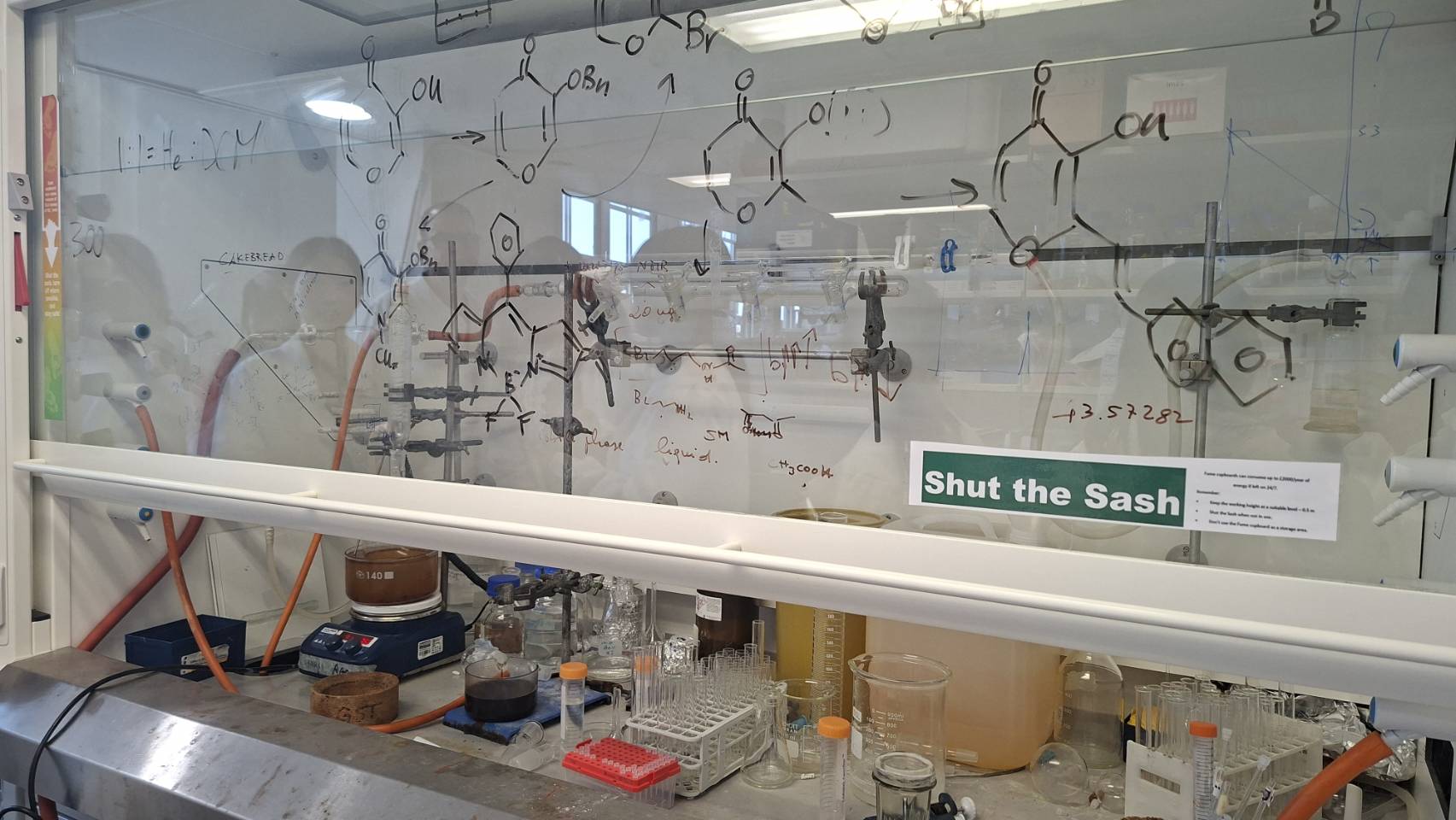
In Taiwan, forensic science camps were fun and exciting—almost like stepping into a crime drama. But a visit to a laboratory at King’s College London revealed a very different reality.
“We passed through three doors secured by access cards. Inside were small rooms filled with computers and precision equipment. The actual working area was extremely quiet and methodical—nothing like the dramas we have seen in the media.”
The experience offered her a more realistic understanding of the patience, precision, and discipline that professional forensic work demands.
Becoming a Police Officer with Empathy
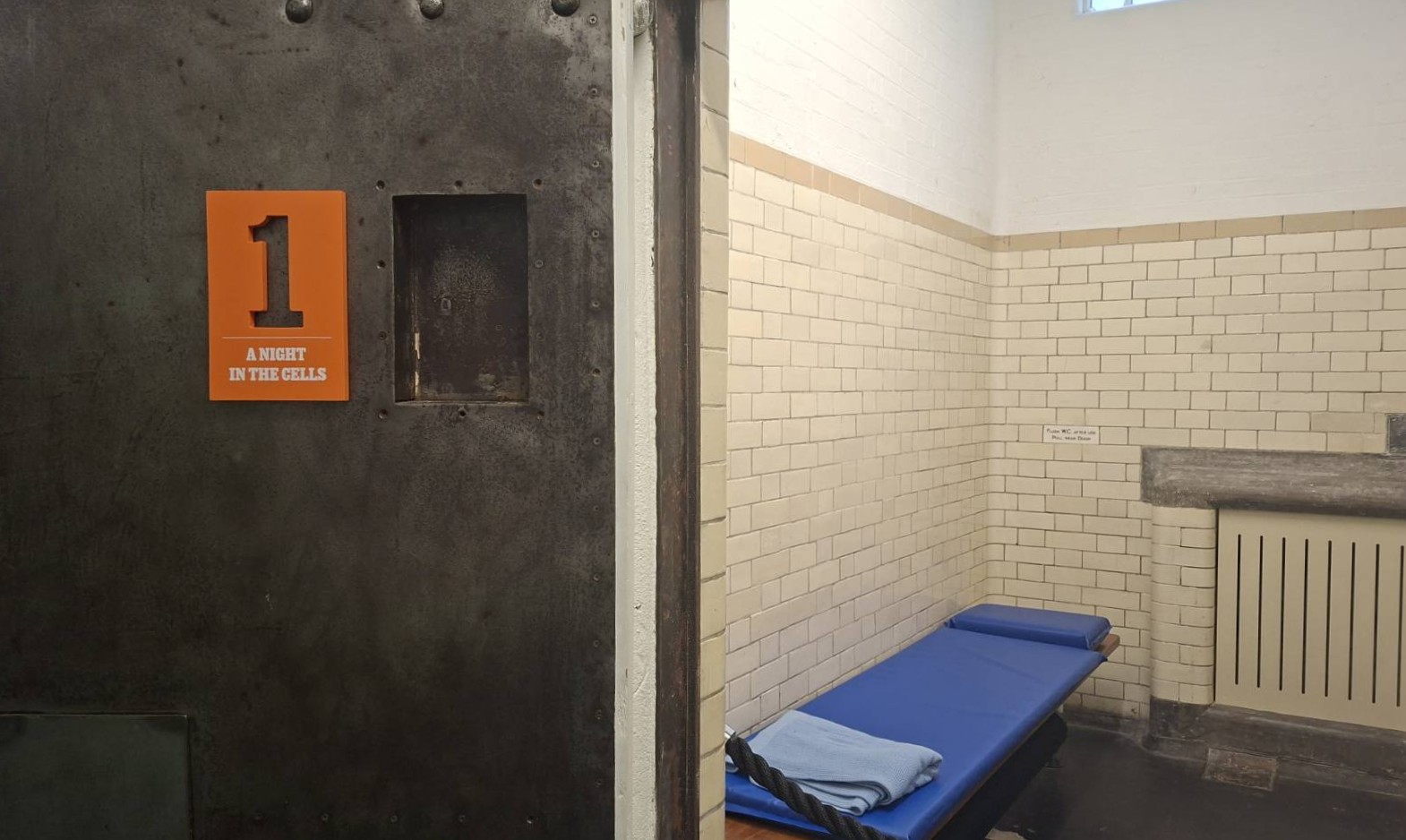
During her 17 days in the United Kingdom, she and her fellow students explored policing, law, and forensic science through visits to courts and laboratories, as well as meetings with professionals. They also experienced British culture through visits to museums and theater.
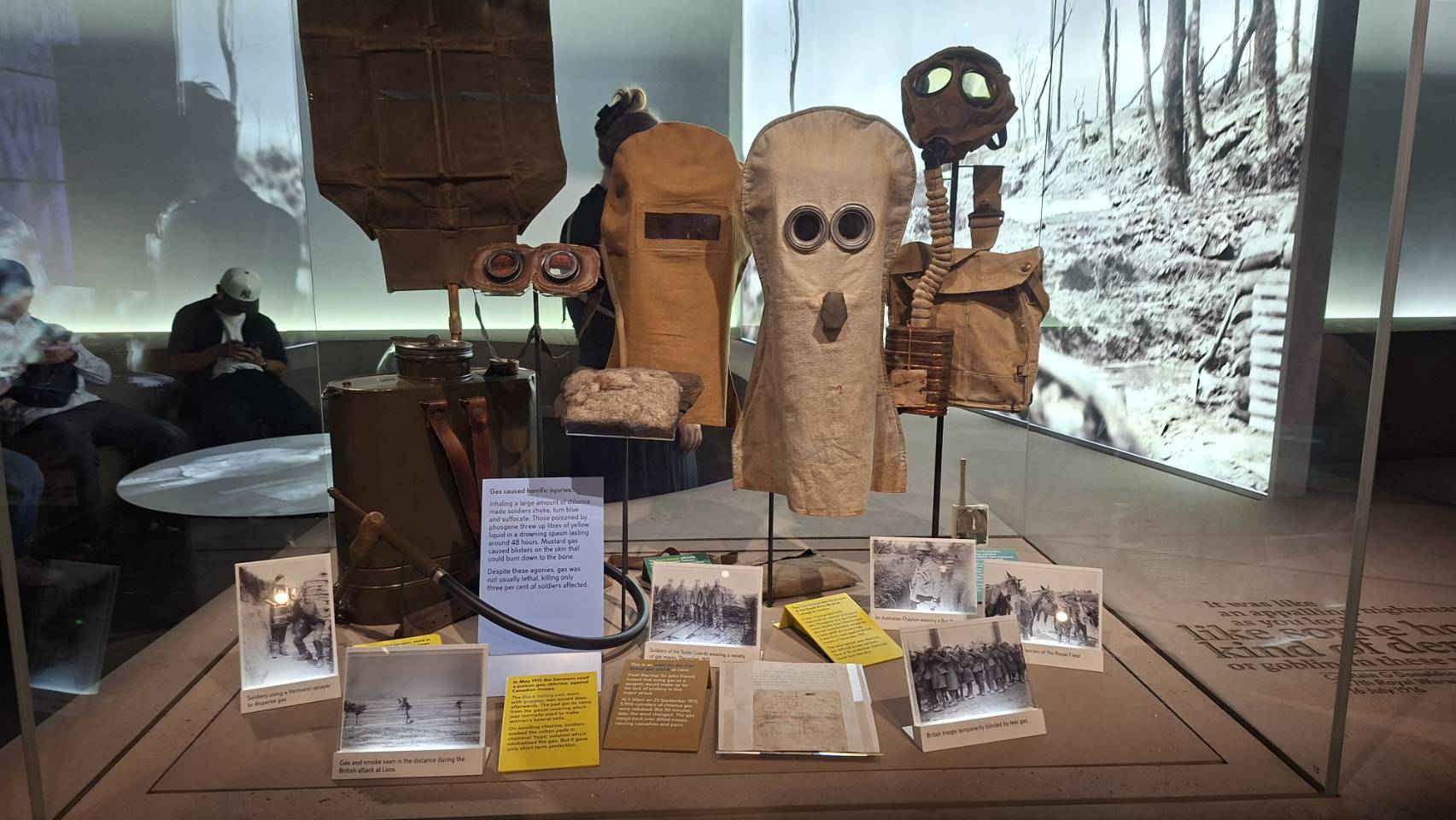
One visit proved especially memorable. At the Imperial War Museum, she was deeply moved by World War II recruitment posters and wartime artifacts. “Compared with some of the other students, I’m more emotional. I naturally try to put myself in other people’s shoes.”
She realized that war extends far beyond the battlefield, affecting cities, homes, families, and everyday life. Even a single poster or artifact can reveal the human experiences and social realities behind historical events. That sense of empathy has also shaped the kind of police officer she hopes to become.
Rather than pursuing a career in frontline criminal investigation, she is interested working in law enforcement relating to women, and juvenile division. “I want to become a police officer who helps protect the rights of young people, women, and children.”
For her, effective policing requires more than forensic expertise and knowledge of the law. It also demands an understanding of the complex social circumstances behind each case.
What Junyi Gave Her
The trip also helped her recognize something she had gained at Junyi without fully realizing it: the confidence to communicate across cultures.
Initially, she worried that her English proficiency might prevent her from passing the program’s selection interview. “What Junyi taught me wasn’t fancy vocabulary or perfect grammar. It taught me that I’m willing to speak to foreigners.”
Junyi’s international learning environment had made speaking English with people from different backgrounds feel natural to her. During the UK trip, even classmates with stronger English grammar skills sometimes asked her to take the lead in conversations.
The support she received from her teachers throughout the application process also broadened her outlook on the future. Once reluctant to consider studying abroad, she is now more open to exploring educational opportunities beyond Taiwan.
A Dream Rooted in Education and Social Responsibility
The UK also introduced her to a different approach to education and public memory. She was struck by how museums openly present difficult histories and real criminal cases rather than avoiding uncomfortable subjects. Combined with Britain’s longstanding detective culture, these experiences deepened her interest in crime prevention and social psychology.
At Junyi, she studies contemporary art as part of the Creative Studies curriculum. For university, she is considering interdisciplinary studies in educational psychology, humanities, and social sciences, or a program focused on crime prevention, with plans to pursue advanced police training afterward.
Her plans are remarkably clear for someone her age.“I once thought I would make art my career. But I began to realize that crime often reflects the condition and atmosphere of society as a whole.”
She now hopes to keep art as an important foundation in her life while channeling her empathy into supporting vulnerable people and addressing social problems through education before they escalate.
Planting Seeds of Possibility
Junyi encourages students to take initiative, embrace challenges, pursue opportunities, and collaborate with others while maintaining their individuality. Equally important, students learn to develop empathy, contribute to their communities, and apply their knowledge to help others.
These values are beginning to take root in meaningful ways. For Tjinuway, her journeyto Canada became an opportunity to reconnect with her indigenous identity. For Hsieh, the experience brought her future aspirations into sharper focus. Others returned with new perspectives of their own.
Together, these 15 students are turning what they learned abroad into deeper questions about their roles at home: What can I contribute? What can I change?
By exploring the world, they have also come to understand themselves more clearly—and how they might make a difference in Taiwan. They will continue sharing their journeys through their personal social media channels.
* On November 6, Junyi School of Innovation will host a sharing session about the Taiwan Global Pathfinders Initiative (TGPI) primarily for members of the school community.