When Hunter Philosophy Meets Waldorf Education - A Mapping of the Hunter School’s Educational Blueprint
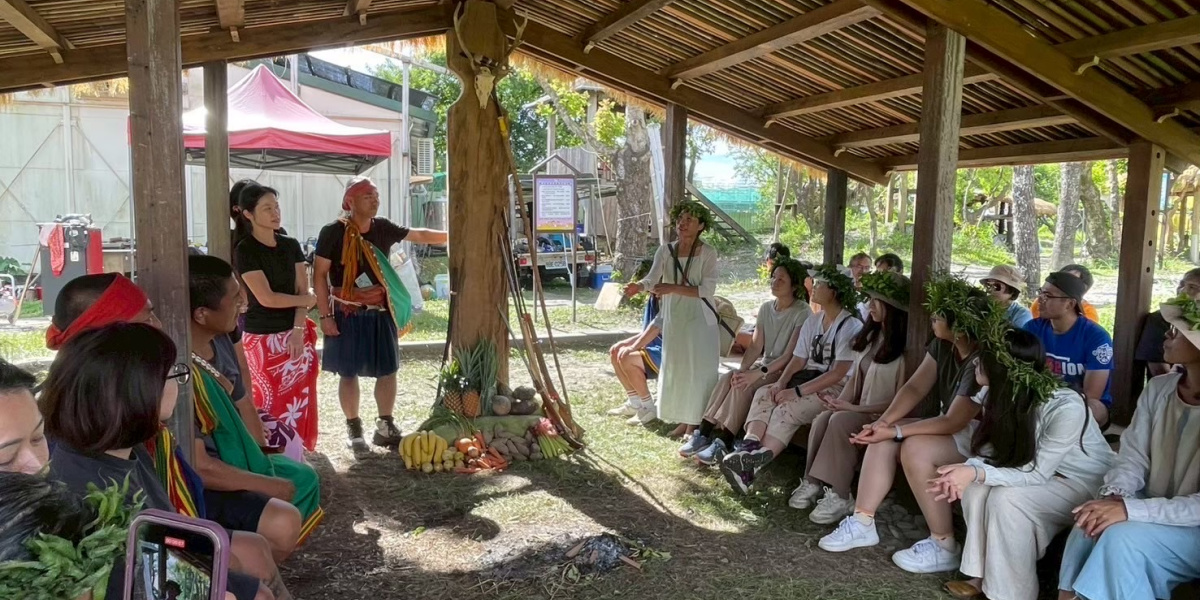
Be Kind to People
Embrace Beauty
Be Kind to Environment and Land
This slightly sentimental, yet humble and grounded sentence feels unexpectedly refreshing when used as so-called “organizational core values” — it comes from the Hunter School, founded in Taitung by Paiwan writer Ahronglong Sakinu.
Over the past two to three years, with the support of The Alliance Cultural Foundation (ACF), more than a dozen members of the Hunter School have traveled to Yilan to participate in the Waldorf teacher-training program organized by the Anthroposophy Education Foundation. When hunter philosophy — rooted in Taiwan’s land — encounters Waldorf education, born in Germany a century ago…
Interviews: Larvark “Lao-Mo” (Min-Hsiang Chuang), Judy Chang
Writer: Yaya (Yulun Huang)
Located in the Lalauran community of Taimali, Taitung, the Hunter School was founded in 2004 by Paiwan writer Ahronglong Sakinu, with the hope of preserving Paiwan hunter culture and awakening people’s innate natural instincts. In 2021, the Hunter School transformed from an association into an educational foundation — a change that not only symbolizes organizational growth but also reflects its evolving strategy and transformation along its educational path. The deeply inspiring Waldorf education is now guiding the Hunter School toward a clearer direction, one that aligns even more closely with the essence of its own cultural roots.
Seeking a Universal Language for the Hunter School
Everything began when Sakinu’s three daughters enrolled one after another at Junyi School of Innovation’s senior high school. Through participating in the many learning activities of their children at Junyi, the Hunter School team members became deeply drawn to the school’s distinctive approach to teaching. Junyi High School’s uniqueness, in fact, arises from its own educational philosophy — an integration of experiential learning, project-based inquiry, and traditional academic subjects.
When the Hunter School further explored the Waldorf pedagogy used in Junyi’s elementary division, they encountered its gentle, inwardly oriented educational perspective — the “anthroposophy” at the heart of Waldorf education, which encourages turning inward to explore the essence of life, and to understand the relationship between human beings and the world. This philosophy deeply resonated with the Hunter School, leading the team to realize that Waldorf education is not an external framework to be adopted, but rather a language that may help them organize, articulate, and express their own educational worldview.
Many members of the Hunter School have entered the life stage of becoming parents, and over the past two and a half years, more than twenty team members have participated in Waldorf teacher-training programs. These trainings do not aim at obtaining certifications within a formal teaching system; instead, they function more like a journey of self-understanding.
Localizing Education: From Learning from Others to Seeing Ourselves
For a long time, the Hunter School’s curriculum and training approach have been truly unique, yet difficult to accurately describe using the language of mainstream education. It is often reduced to “Indigenous cultural education” or “cultural experience courses.” Because of this, the Hunter School hopes to use the educational vocabulary of Waldorf pedagogy to reinterpret and articulate its core values: be kind to people, embrace beauty, be kind to environment and land.
The Hunter School also discovered that many of its philosophies naturally align with Waldorf education. In raising children, both emphasize sensory experience, living rhythms, and respecting each child’s essential developmental nature. Waldorf education and anthroposophy help the team see the holistic development of both children and themselves. This process not only allowed the Hunter School to recognize its own path more clearly, but also supported the team in establishing a more logically grounded educational framework for curriculum design and long-term vision.
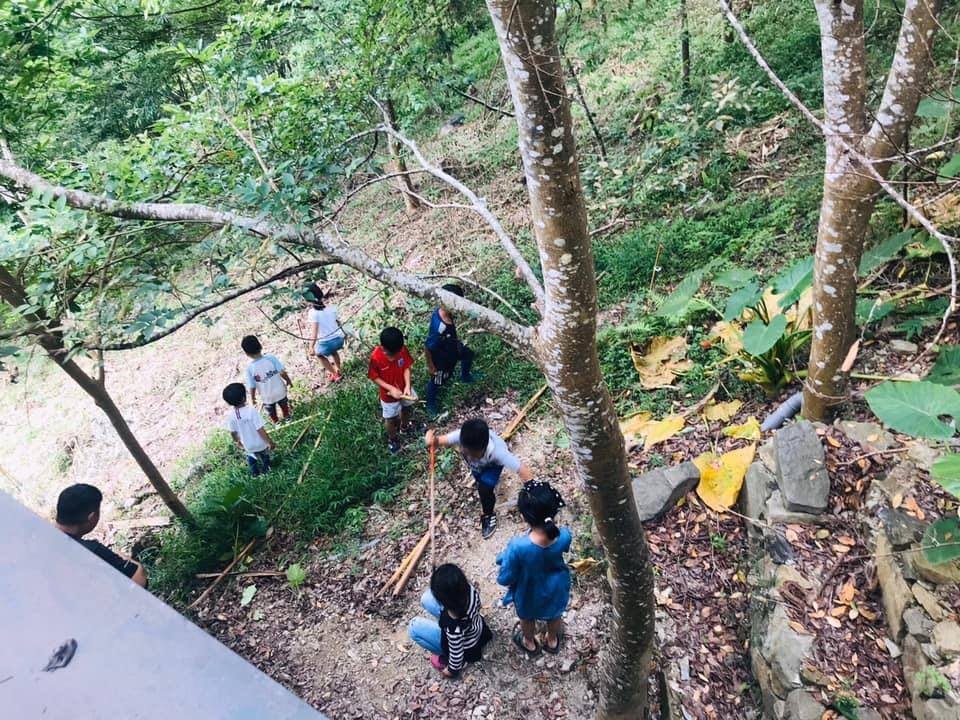
Though often described in the Waldorf community as being “very Waldorf,” the Hunter School is in fact deeply rooted in local culture. Its five-stage “Hunter Curriculum — Carrying, Following, Together, I Can, Transparency” grows directly from the wisdom and training culture of the Paiwan hunters. One of the foundational elements of the curriculum comes from the “cakar men’s house” of the Lalauran community.
In Paiwan tradition, boys enter the cakar from adolescence and remain until marriage; the village relies on the cakar to take on public affairs, and the cohesion and strength of the cakar determine the development of the entire community. Therefore, Lalauran has established a rigorous set of cakar ethics and hierarchical structures — the purpose is to support children through age-based division of roles and progressive responsibilities, gradually nurturing them into strong young adults who can contribute to the community. This resonates beautifully with Waldorf education’s approach to curriculum design: “meeting the developmental needs of each age.”

The Hunter School’s program design corresponds with great precision to the developmental stages of children — what Paiwan refers to as “nurturing” rather than “education.” This wisdom, inherited from the cakar men’s house, is something many Waldorf schools in Taiwan greatly admire. However, the current program remains short-term in duration and has yet to be expanded into full-semester or full-year formats with a full curriculum.
Larvark “Lao-Mo” (Min-Hsiang Chuang), a founding member of the Hunter School and now the CEO of the Hunter School Education Foundation, observed that while children who grow up within the Waldorf education system are often exceptionally talented, a higher proportion of them lack the rules and discipline emphasized in the cakar culture. For this reason, he hopes to build a more developed, age-based, and tiered educational system that incorporates the Paiwan concepts of age groups and division of roles — allowing different educational philosophies to complement and strengthen one another. Larvark “Lao-Mo” shared that this realization prompted him to consider that the Hunter School, too, must begin documenting, organizing, and systematizing its own unique content in order to develop its own educational theory.
Looking back over the past two and a half years of teacher training, the greatest gain has not been replicating an external system, but rather catalyzing the team’s inner growth.
The Hunter School Blueprint: Three Core Educational Pillars and Current Actions
Judy Chang, a core member of the Hunter School, resigned from her government position in recent years to devote herself fully to education. She has participated in Waldorf teacher training for three consecutive years and also joined the teaching team of Junyi’s elementary school. Today, she is one of the key leaders shaping the Hunter School’s educational strategy.
In Judy’s understanding, Waldorf education is more of a philosophy than an educational system that provides definitive answers. It requires us to transform it according to the characteristics of our local context. And in reality, much of the traditional wisdom that nourishes children already exists in our own culture.” For example, drawn from Paiwan hunter culture, Sakinu has always emphasized cultivating children’s abilities to observe, wait, respect, and cooperate — rather than teaching the skills or technical knowledge of hunting.
My father once shared a wonderful piece of hunter philosophy. He said, “A hunter’s solitude and loneliness are the greatest sources of spirit and strength. My son, if you want to learn to become a good hunter, you must learn the patience of ‘waiting.’” - Sakinu
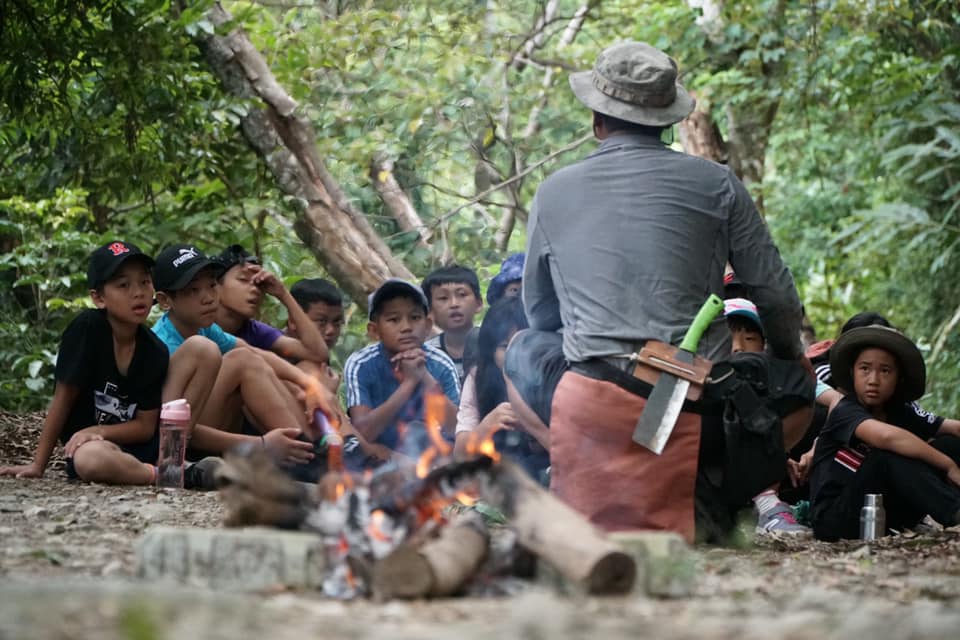
After this exploratory journey through Waldorf teacher training, the Hunter School team established three major pillars of their work:
to have their own school, to become a school within schools, and to engage in international connections.
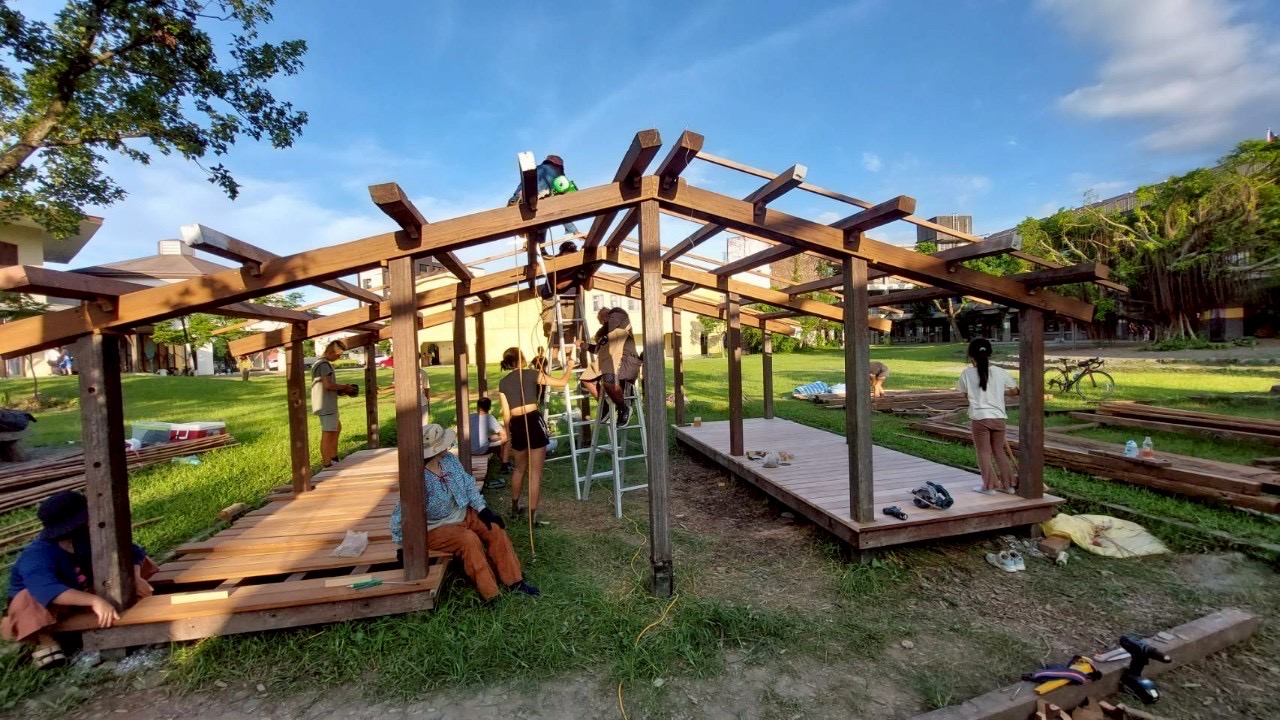
Among these, “becoming a school within schools” has already begun to take shape, as more and more educational groups are visiting to observe, invite collaboration, and exchange ideas. The Hunter School hopes that its campus can become a school for all children, offering its spaces and environment generously to partner with schools from across Taiwan. “We want to be place where children can learn—where their learning allows for different ways of seeing, hearing, and sensing.”
Interestingly, the first pillar of “having their own school” has been placed last in the actual timeline. This echoes something Sakinu has contemplated repeatedly over the past twenty years – while others typically build a school first and then search for teachers, the Hunter School chose instead to first gather a group of like-minded people, nurture trust and shared understanding, and then build a school together. This allows every team member to step into education work with greater stability, confidence, and rootedness.

On the other hand, after the postponement of the 2024 charter elementary school initiative, the Hunter School drew inspiration from the experience of the Ci-Xin Waldorf School in Yilan. They decided to establish a kindergarten as an initial step — one that could serve as both a starting point and a way to expand and nurture their community.
This initiative is being led by a group of ina (mothers) and kama (fathers) from the Hunter School, who have invited experienced partners to support the regulatory and administrative processes. The hope is to launch the kindergarten as an Indigenous early childhood care and education center, located in Sakinu’s family house in the Lalauran community.
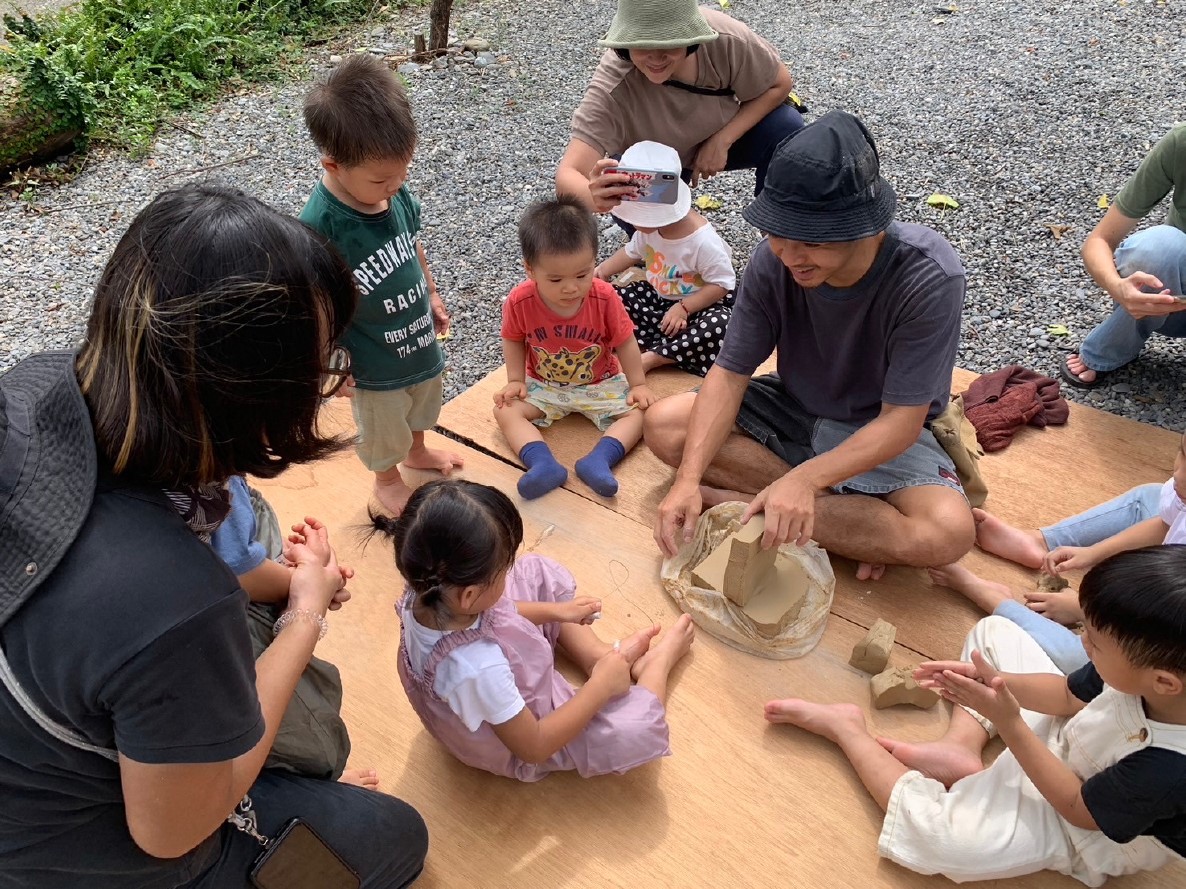
In the near future, they envision that “children will greet the new day by singing traditional songs in the soft morning light. They will learn about plants, shape clay into bowls, and practice building a fire to cook their meals. They will read stories together, play freely, run in the rain, and learn their way through the forest.” (Quoted from internal Hunter School documents)
“International Connections” as One of the Core Educational Pillars
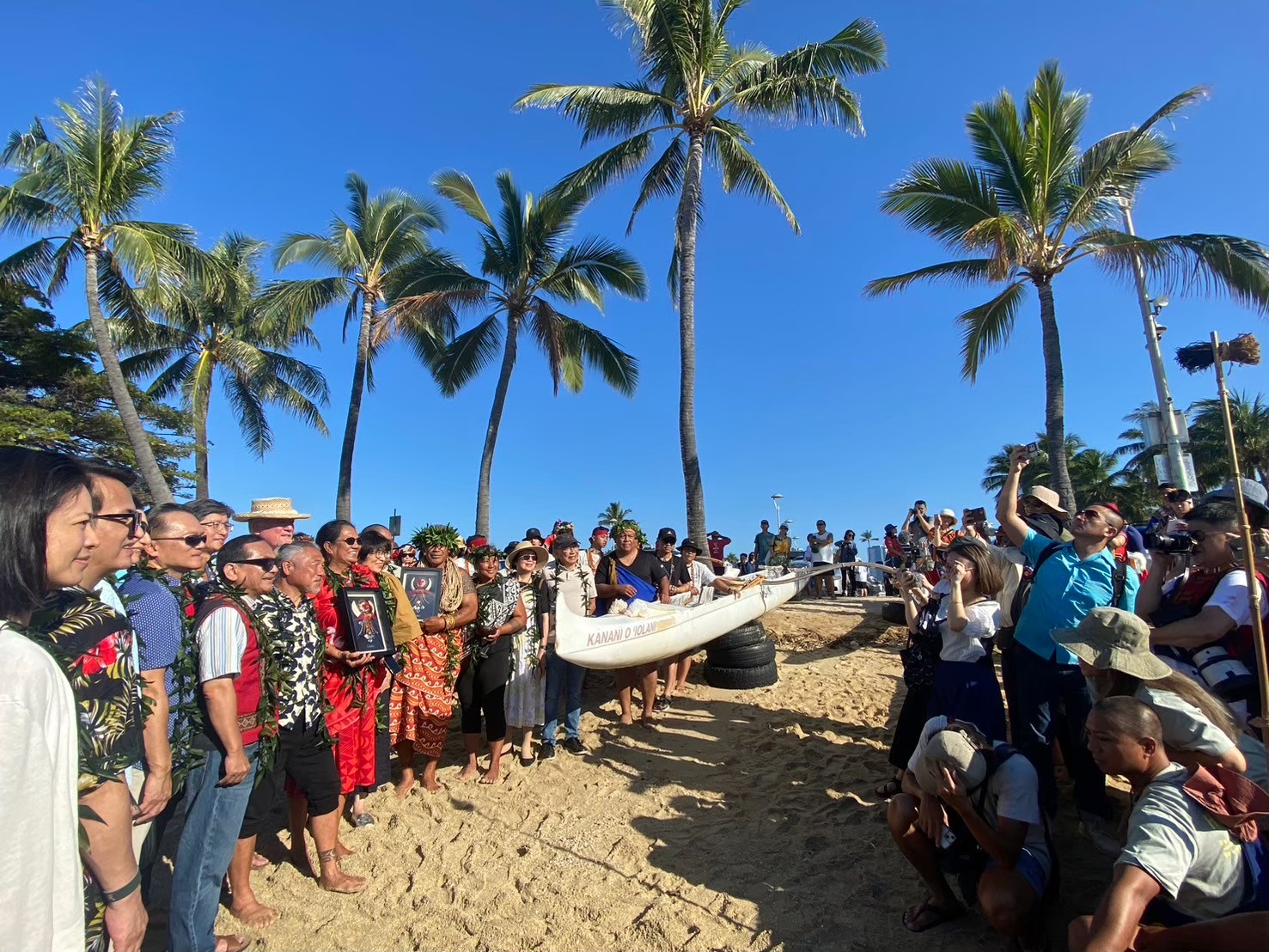
Although “international connections” appears as the third of the Hunter School’s three educational pillars, it is actually the earliest and most continuously cultivated area since the school’s founding.
“From past to present, Hunter School has made Taiwan visible through participation and exchanges in international activities… substantially promoting friendship and cooperation like 'family', and establishing Taiwan's international image and status as originally belonging to Austronesia.” – Hunter School
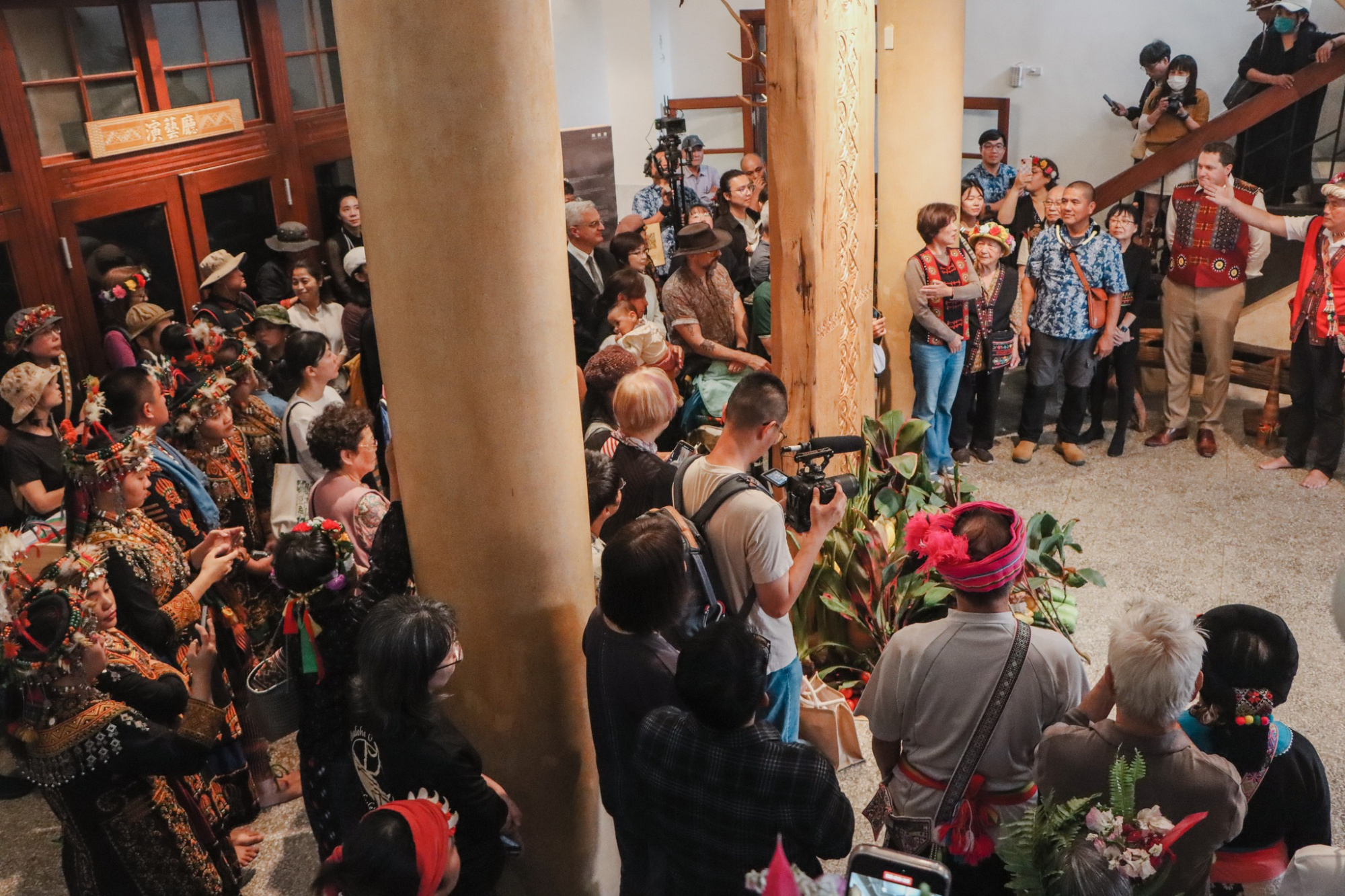
This year, after five years of restoration work by the Taitung County Government, the former Taitung Council building, a historic structure, was transformed into the Just Art House, a new performance-arts incubation center. By officially moving into this space, the Hunter School has extended its international-exchange energy from the mountains behind the community into the heart of downtown Taitung.
Just Art House now serves as the Hunter School’s urban base, allowing more people to come into contact with and understand its cultural vision. While it is too early to say that it will drive the development of a full-fledged performing-arts industry, it has undeniably created a place in the city where the Hunter School’s energy can gather and flow. As such, education and Just Art House are not two parallel lines but parts of one interconnected whole.
In the same spirit as the Hunter School’s indigenized approach to education, all forms of exchange occurring in Just Art House are rooted in integrating with local culture — not in copying or importing operational models from other venues. In less than a year since opening, the Hunter School has coordinated with public and private organizations, collaborating with local teams and international partners to carry out numerous meaningful cultural exchanges. These initiatives have created opportunities for local youth and artists to interact with international partners, and have begun shaping a cultural rhythm unique to Taitung — allowing culture to be seen and lived in everyday life.
After a fire destroyed Sakinu’s family house, the Hunter School’s original base, in 2019, the school’s recent transformation was not a process of post-disaster reconstruction. Instead, it has been a heightened awareness of the limits of time and life — one that accelerated the school’s founding mission – to develop an educational language that enables deeper self-understanding while engaging in dialogue with the wider world.
Their path has moved from learning through Waldorf education, to rediscovering the wisdom of Paiwan culture, and further toward forming their own educational direction and methods of practice. Through ongoing international exchange, the operation of their urban base, and the kindergarten/early-childhood center currently in preparation, the Hunter School is advancing both educational localization and international connection in tandem. In doing so, they are shaping a local, culturally rooted educational model that not only takes form within the community but also carries the capacity to extend outward and connect globally.
Photos courtesy of Hunter School.